
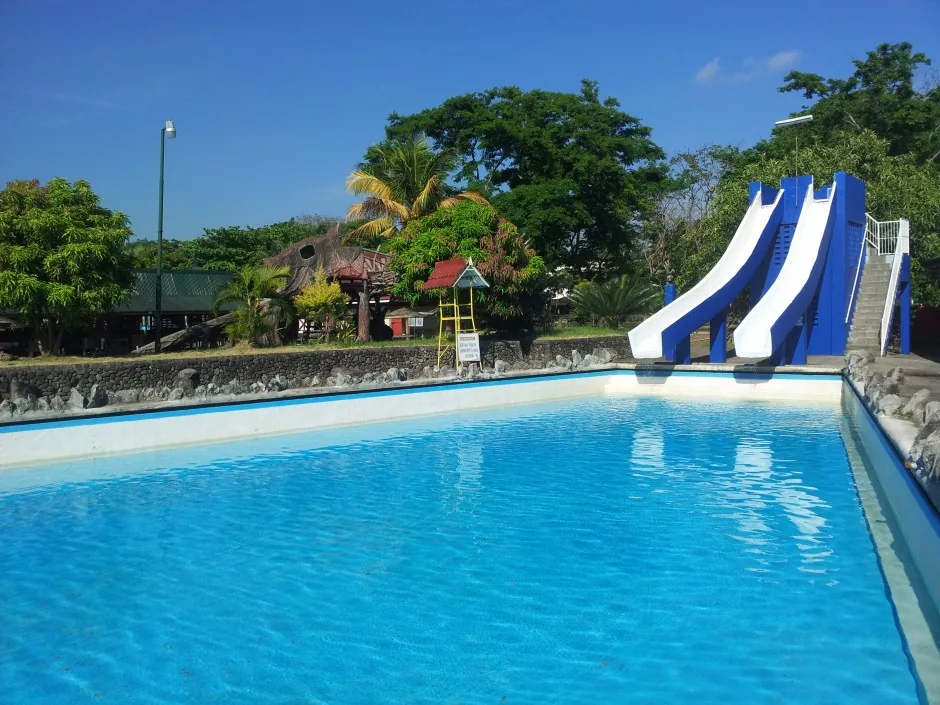
A good Pansol swimming day with children is planned around supervision and recovery, not around fitting the maximum number of activities into the booking window. Before the family leaves home, decide who watches each child, which facilities are actually open, where the group will rest, and what conditions would make you pause or end the swim.
Start with a child-by-child plan
“Three children” is not enough information for a safe plan. Write down each child’s age, swimming ability, confidence around slides, and need for hands-on help. Resorts may classify children by height rather than age for admission or ride rules, so ask the current operator how its rules work. Do not assume that a child who is tall enough for an attraction is a strong swimmer, or that a confident swimmer can be left without active adult attention.
Assign one named adult to each young or weak swimmer during every pool period. “Everyone is watching” often means nobody is sure who has responsibility. If several adults want to swim, use short rotations: one adult stays dry and alert near the water while another joins the children, then they switch. The plan should continue even when a lifeguard or resort attendant is present; staff oversight does not replace family supervision.
Confirm the pool map before the trip
The preserved La Vista Pansol archive shows large open pools, tall water slides, a covered pool and smaller children’s play areas. Those photographs document the former site, but they do not prove that every zone operates on a particular date. Ask for a current list of open pools, slide rules, water depth information, required swimwear and any maintenance closures. If a particular kiddie area is the reason for the trip, request a recent dated photo or written confirmation rather than relying on an old gallery image.
Choose one meeting point that children can recognize without crossing a pool deck. Adults should also agree on a rule for toilet trips, food breaks and moving between zones: a child leaves the water only with the assigned adult, and the supervising adult verbally transfers responsibility before taking a break.
Plan for Philippine heat as well as water
PAGASA describes the Philippines as tropical and maritime, with high temperature, humidity and abundant rainfall. It identifies a generally dry season from December to May and a rainy season from June to November, while current conditions still need a same-day check. PAGASA’s heat-index service also warns that near-real-time observations can change as data is updated. The practical conclusion is simple: season labels are useful for packing, but the current forecast and heat index should decide the day’s pacing.
Schedule shade and drinking breaks before anyone feels unwell. The Department of Health lists dehydration, heat cramps, heat exhaustion and heat stroke among risks when heat index is high. Bring drinking water that remains accessible outside the pool, hats or cover-ups for rest periods, and dry clothes. Avoid turning a shaded room into an excuse to extend the day beyond what tired children can handle.

A worked example for a mixed-age family
Consider a group of six adults, an eight-year-old confident swimmer, a five-year-old beginner and a toddler. The family chooses two 35-minute pool periods separated by shade, water and food. One adult is assigned to the toddler at arm’s reach; another stays with the beginner; a third watches the older child’s slide area. Three adults remain available to prepare food, handle bags and rotate into supervision. Before changing pools, the group counts everyone at the meeting point.
This structure may feel conservative compared with an unplanned outing, but it produces more usable swimming time. Children who are rested and hydrated are easier to supervise, and adults are less likely to become distracted by bags, food or conflicting expectations. If the toddler becomes sleepy or the beginner becomes cold or anxious, the family can stop without treating the change as a failed trip.
Pack by task, not by person
Use four bags or clearly separated sections: swim items, dry clothes, food and hydration, and health essentials. Keep medicines, emergency contacts and any allergy information with an adult rather than in a child’s backpack. Place wet items in a separate washable bag. Bring footwear suitable for wet surfaces and avoid glass containers unless the current rules explicitly allow them.
If the family plans to use a room, confirm whether towels, toiletries, drinking water, refrigerator access and an electric kettle are included. Historic room descriptions are not a reliable current packing list. A short written inclusion sheet prevents duplicate packing and avoids discovering after arrival that a basic item carries an extra charge.
When to change the plan
Delay, shorten or stop the visit if official weather information makes travel unsafe, a required pool is closed, the group cannot maintain active supervision, or anyone shows concerning heat-related symptoms. Weather fees and rescheduling terms should be confirmed before payment, not negotiated only after a warning is issued.
For most families, the best plan is not the one with the longest pool time. It is the one that keeps adult roles clear, gives children predictable breaks, and leaves enough energy for the trip home. Use the visit checklist to collect group details and the rate checklist to request current written inclusions.
Sources and review notes
- DOST-PAGASA: Climate of the Philippines, reviewed 21 September 2026.
- DOST-PAGASA: Heat Index, reviewed 21 September 2026.
- Department of Health CAR: Heat-related illnesses, reviewed 21 September 2026.
- La Vista Pansol preserved former-site image and page archive, inspected September 2026. Current facility operation was not inferred from the archive.