
Choose a private pool when exclusive group space and control of the program matter most. Choose a larger resort complex when the group values multiple activity zones, staffed common areas or flexible facilities more than exclusivity. Neither format is automatically safer, cheaper or better for families; the practical difference is who shares the site and how much coordination the organizer must carry.
Start with the social shape of the group
A private property often suits a reunion, barkada or celebration whose members want to cook, talk and swim in one contained base. It can reduce confusion about meeting points and make the space feel personal. The tradeoff is that the group may handle more of the food, cleanup, keys, equipment and supervision itself.
A resort complex can suit mixed households that want several pools or dry activities and do not need exclusive use. It may offer more staff-supported facilities, but the group must define boundaries in shared spaces and confirm which amenities are included. Property names are not reliable format labels: some “resorts” are exclusive rentals, while some private-pool venues sell multiple units.
Compare supervision and privacy together
Exclusive use can make headcounts easier because unrelated visitors are absent, but it does not replace active supervision. Ask about pool depths, barriers, lighting, slippery transitions and the position of bedrooms or dining areas relative to the water. A compact private pool may be easier for one family to observe than a large multi-zone complex, while a badly arranged private property can create blind spots.
In a shared complex, establish a meeting base and assign adults to children or zones. Confirm whether lifeguards or attendants are present, but keep the group’s own plan. Privacy also affects sound, celebrations and sleeping: request current rules for music, visitors, quiet hours and shared corridors.
Measure the work hidden inside the price
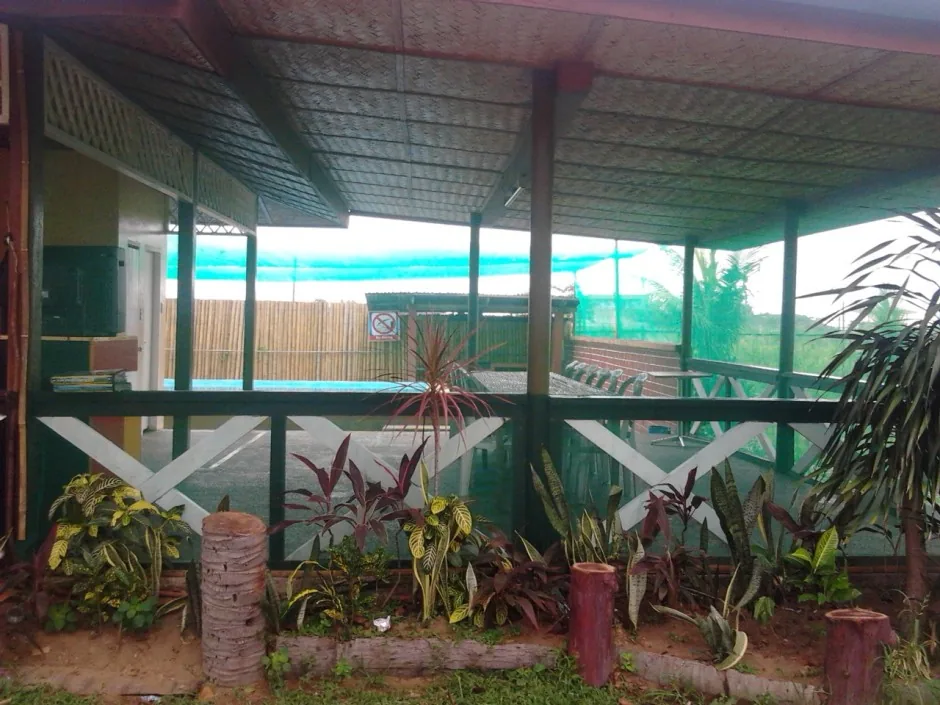
For a private pool, check whether the quote includes exclusive use of the whole property or only one unit; water, electricity, gas, kitchen equipment, bedding, towels, cleaning and parking; and fees for extra guests, karaoke, suppliers or pets. Record check-in, checkout and cleanup duties. A low rental price may assume the group supplies food, linens or staff time.
For a resort complex, check entrance fees, required cottages or rooms, attraction access, meal rules, corkage, lockers and parking. Calculate both options using the same headcount and time window. If the private venue sleeps 20 but only 12 guests stay overnight, do not compare its full capacity with a per-person day-use quote as if they were equivalent.
A worked decision for a three-generation family
A group of 18 includes four children, two seniors and 12 other adults. The private-pool option offers one contained courtyard and kitchen but has bedrooms upstairs and no confirmed step-free bathroom. The resort complex has shared pools and less privacy, but two ground-floor rooms, a shaded dining base and a quieter dry area.
The family first preferred exclusivity. After giving extra weight to senior access and rest, it selects the complex and assigns adults to the children in shared pool zones. If the private property confirms a suitable ground-floor route and bathroom, the result may reverse. The example shows why format should follow the group, not the other way around.
Questions that reveal the real format
Ask: Is the complete property exclusive during our window? Can other guests or staff use the pool? Which rooms and common areas are included? Who handles water quality, cleaning and waste? What staff are present? Where can non-swimmers rest? Which route serves older guests? What happens during rain, maintenance or a power interruption? What must the group bring and restore before checkout?
Request answers in the quotation rather than relying on labels in an advertisement. Use recent photos of the exact unit and ask whether renovations or closures have changed the layout.
Our judgment
Private pools are strongest when the group genuinely values exclusive social space and has organizers ready to manage the property. Complexes are strongest when varied facilities, accessible rest options and staff-supported operations outweigh privacy. Shortlist examples in both formats from the places directory, then use the multigenerational room guide before requesting quotes.
Sources and review notes
- La Vista Pansol preserved pool and room archive, inspected September 2026; it documents a former resort complex and does not establish present operation.
- The three-generation case is an editorial scenario designed to expose tradeoffs, not a recommendation of a named property.
- Current rules, staffing, accessibility and exclusive-use terms must be confirmed with each operator.