
A reunion venue works when relatives can arrive, eat, talk, swim and rest without one activity disrupting every other activity. Capacity matters, but it is only the first test. The stronger checklist follows the family through the whole day and identifies where the venue must support different ages, mobility levels and schedules.
Build the guest profile before touring spaces
Separate confirmed guests from possible guests and note children, older adults, wheelchair or walking-aid users, pregnant guests, and anyone who needs a quieter room. Record how many people will swim, how many will only attend the meal, and how many intend to stay overnight. A venue that looks oversized for the meal may be appropriate once changing areas, bags and circulation are considered; a venue that meets the advertised maximum may feel crowded with buffet tables and a program area.
Choose one family coordinator and one backup. They collect the quotation, confirm changes and keep a shared copy of the final arrangement. Individual relatives can still ask questions, but only designated coordinators approve changes that affect price or schedule.
Match the space to the actual program
Write a simple run sheet: arrivals, welcome, meal, photographs, games, swimming periods, rest, cleanup and departure. Then mark which space supports each block. If speeches and swimming happen simultaneously, check whether the hall can be heard over pool activity. If grandparents arrive before the main group, confirm a shaded waiting place and toilet access.
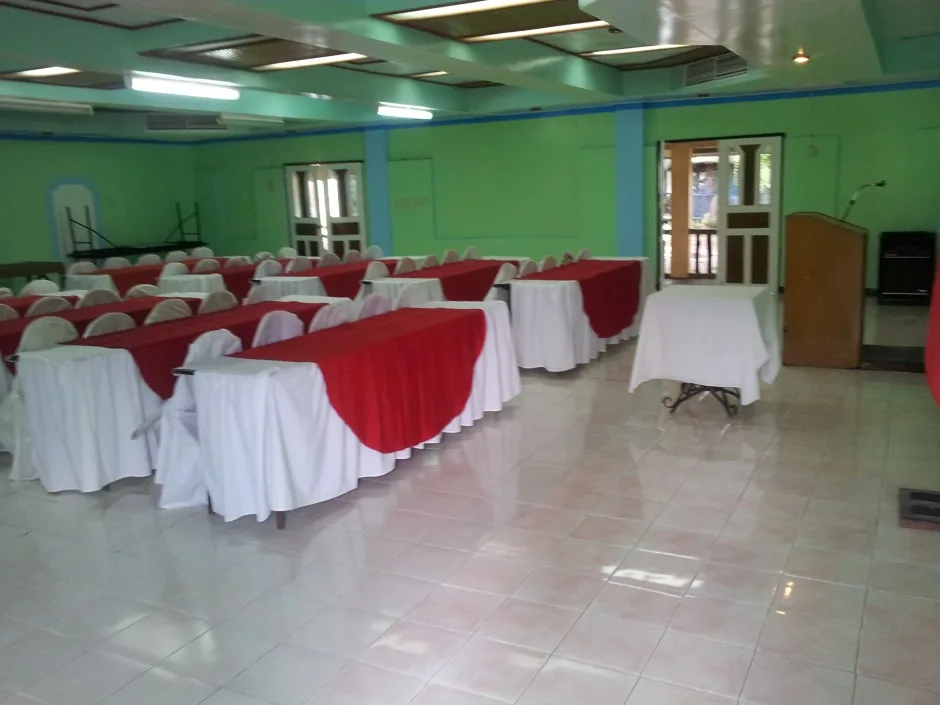
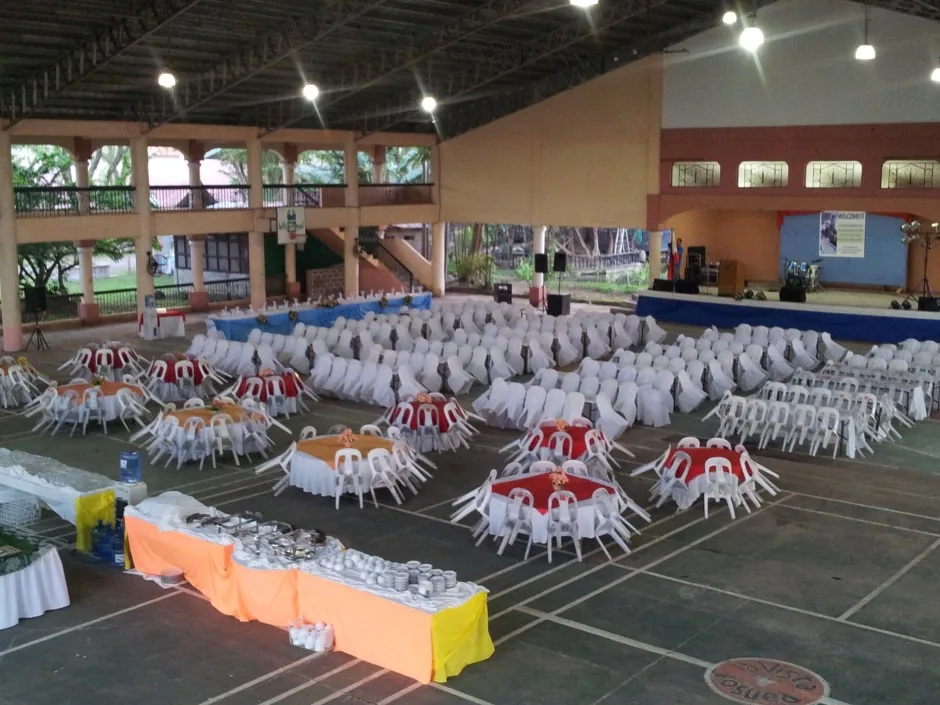
The historic La Vista Pansol archive contains indoor halls, covered group spaces and banquet layouts. These images demonstrate different types of use, but current capacity, furniture and air-conditioning require verification. Ask for a floor plan or dimensions and a recent photo in the layout you want.
Food: settle workflow, not only menu
Decide whether food is catered, brought ready to serve or prepared on site. Ask where vehicles unload, when suppliers may enter, what equipment is available, which fuel or appliances are permitted, how cold food is stored and who removes waste. Clarify corkage and cleanup charges in the written quotation.
For a potluck, assign categories and serving quantities instead of allowing every household to bring anything. Keep allergen information with the dishes and separate serving utensils where necessary. Plan drinking water independently from sweet drinks. If the reunion includes a long pool period, schedule a proper food break rather than letting children carry meals around wet surfaces.
Swimming needs its own supervision plan
Reunions create a specific supervision risk: many familiar adults are present, so everyone may assume someone else is watching. Assign named adults to young and weak swimmers, use rotations, and set a visible meeting point. Confirm current pool and slide rules and do not treat a historic photo as evidence that a zone is open.
Keep the program flexible enough that a child or older adult can stop swimming without leaving the whole gathering. A nearby air-conditioned or quiet room can be more valuable than an extra entertainment item when the family spans several generations.
Accessibility and comfort questions
Ask about the path from parking to the hall, steps, railings, toilet access, room location, lighting and wet-surface transitions. “PWD-friendly” is too broad to rely on without details; describe the actual need and request photographs or measurements. Place older relatives away from loudspeakers and direct sun, and avoid making them cross the pool deck to reach essential facilities.
Weather and travel planning
PAGASA describes a general rainy season from June to November and a dry season from December to May, but a reunion must use the current forecast and active warnings. Identify which activities move indoors during rain and whether the chosen covered space can hold everyone, not just the dining tables. Ask how official weather disruption affects rescheduling.
Collect vehicle counts and arrival areas. Share the confirmed map pin and gate instructions in the final family message. For relatives travelling separately, define a contact person who will answer arrival calls without leaving children unsupervised.
A worked 35-person layout
For 24 adults, seven children and four older adults, the family chooses banquet seating for 32 plus a quieter four-seat table, one clear wheelchair route, a buffet against a non-circulation wall, and a dry bag area away from food. Swimming is split into two periods with four named supervisors. The hall remains available during both periods so non-swimmers do not have to sit beside the pool.
The family rejects a cheaper package that includes more pool access but no confirmed indoor rain backup. The decision is not that extra pools are unimportant; it is that weather resilience and multigenerational comfort create more value for this group.
Final confirmation
Seven days before the event—or at the deadline stated by the operator—confirm headcount, layout, suppliers, rooms, pools, payment balance, map pin and emergency contact. Send the final run sheet to the venue and the family. Use the event-space overview and quote checklist to keep the commercial details aligned with the plan.
Sources and review notes
- DOST-PAGASA: Climate of the Philippines, reviewed 21 September 2026.
- La Vista Pansol preserved former-site Function Hall and Rates pages plus event photographs, inspected September 2026. Current capacities and packages were not inferred.